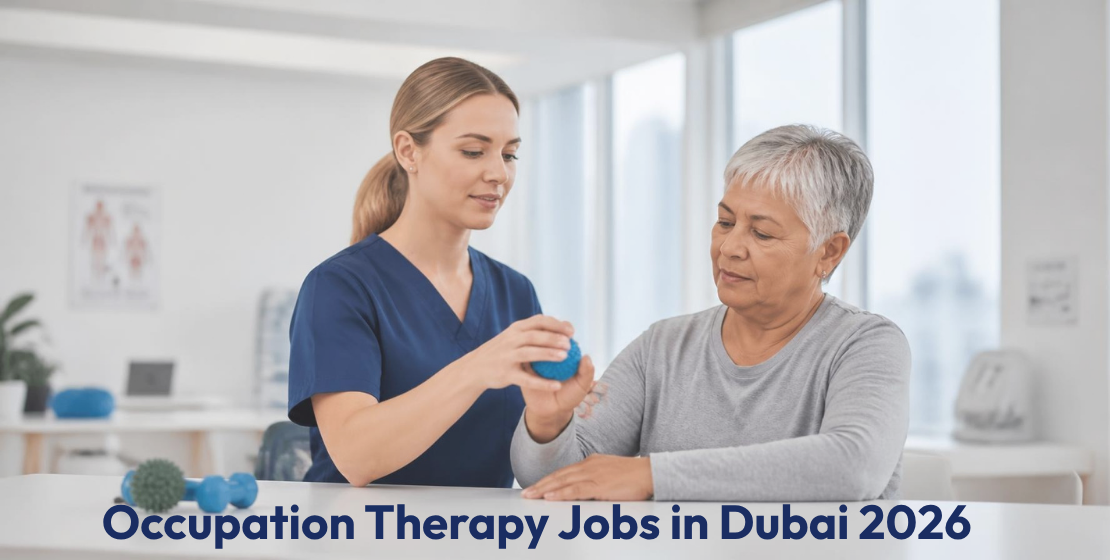
If you’re an Occupational Therapist thinking about a move to the Gulf, Dubai should be at the top of your list. The city is investing heavily in rehabilitation, pediatric therapy, and elderly care, and hospitals are actively looking for qualified international talent — especially from the USA, Europe, the UK, South Africa, and the Philippines. Here’s what you actually need to know before you apply for the Occupational Therapy jobs in Dubai.
Pay varies a lot depending on your employer, experience, and setting (public hospital vs. private clinic vs. school). Based on current market data, most OTs in Dubai earn somewhere between AED 8,000 and AED 20,000 a month, with senior therapists and those working for government-linked facilities like the Dubai Health Authority earning toward the top of that range or higher.
Therapists with 7+ years of experience and a specialization — pediatrics, neuro-rehab, or hand therapy, for example — regularly command the strongest packages.
On top of base salary, most roles include a housing allowance, annual flight tickets home, medical insurance, and tax-free income. That last point matters a lot: there’s no personal income tax in the UAE, so your take-home pay goes a lot further than the salary number alone suggests.
All the Emirates need OTs, but Dubai has a few clear advantages:
Abu Dhabi (DOH) and the Northern Emirates (MOH) are worth considering too, especially if cost of living or competition is a concern — but for the volume of roles and long-term career options, Dubai is usually the strongest starting point.
You cannot legally work as an Occupational Therapist in Dubai without an active Dubai Health Authority license. Here’s the process in plain terms:
The whole journey usually takes anywhere from six weeks to a few months, depending on how quickly your documents come back from verification.
Missing paperwork, expired certificates, or a name mismatch between your passport and your degree are the most common causes of delay.
This is exactly where most candidates get stuck — and exactly where we help. Our team manages the entire licensing journey for you: see how our UAE medical licensing support works.
Before you apply, ask yourself:
If you answered yes to most of these, you’re likely a strong candidate for the current Dubai market.
Dubai’s healthcare sector is expanding fast, and allied health roles — occupational therapy, physiotherapy, speech therapy, and dietetics — are some of the most in-demand categories on the market today.
Government initiatives around aging population care, autism and early-intervention services, and post-surgical rehabilitation are all driving hospitals and clinics to hire more allied health professionals, not fewer. For European, UK, and internationally trained OTs, this is a strong window to enter a market that still has more open roles than qualified candidates.
We work exclusively in Gulf healthcare recruitment, and licensing is where we add the most value.
Our team:
Ready to take the next step? Submit your resume through our job seekers page and our team will match you to current openings — or browse current Occupational Therapy and Allied Health vacancies directly.
Dubai’s healthcare sector is growing, and it needs skilled Occupational Therapists like you. Let’s get you licensed, matched, and working.